
The Second Violin
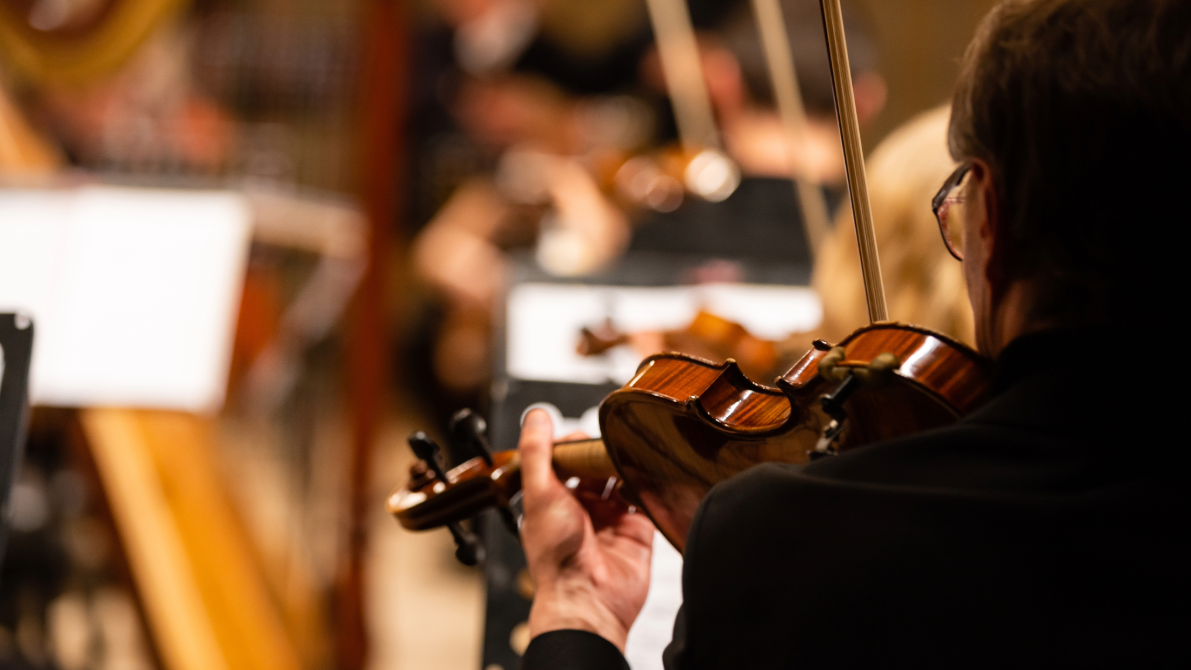
Not long ago, I had the pleasure of seeing and hearing some of Beethoven's symphonies performed by the West-Eastern Divan Orchestra conducted by Daniel Barenboim, a symphonic orchestra made up only of young musicians, Israelis and Palestinians. A commendable effort for peace by this distinguished conductor.
Always at the start of a concert, the conductor's greeting is directed only to the first violin; the highest-ranking musician who is also the representative of the orchestra's musicians. The existence of a first violinist implies the existence of a second, but the latter is rarely mentioned, while the first violin is clearly identified by the conductor's greeting. In the case of conductor Daniel Barenboim, he always greets both, perhaps because one is Palestinian and the other is Israeli?
The ongoing animosity between these two brother peoples, not due to proximity, but because of consanguinity, dates back centuries of history, when according to what the Bible states, they are born as children of the same father, brothers playing different violins in life.
Ishmael and Isaac
According to the Holy Scriptures, God promised Abraham that He would give him a son and with him the longed-for descendants, and to make that possible, he united with his maid to have the desired son since his wife was barren. From that relationship, Ishmael was born, from whom the Palestinians descend; but he had to play second violin, because, although he was the first son, he was not the son promised by God; therefore, there was no feast for his birth, he was not the son of the promise, he was only the son of a maid.
When Abraham was willing to sacrifice Isaac, the son of the promise, God says to him:
Because you did not refuse your son, your only
Only? Would it be because Ishmael had already been expelled along with his mother? We don't know, but Isaac was considered the only son, the son of the promise, the preferred one despite everything. However, Ishmael, who "played second violin" in this story, also received from God the promise that He would make a great nation out of him; the Palestinian people we know today and as the Scripture says:
God was with the boy
Just as these two brothers "played violins" that are still heard today with very different tonalities, we also, and to transcend, find another story in the Holy Scriptures; two sisters who had to play them in the struggles of life, but this time, like many, in love.
Leah and Rachel
In the Bible, there are beautiful love stories, one of them tells that Jacob fell in love with Rachel so much that he was willing to work seven years for her as a dowry in order to have her as a wife, however, the biblical account states that after those long seven years Laban, Rachel's father, did not fulfill what was agreed, and on the much-anticipated day, the wedding day, he gave Jacob in marriage to his other daughter named Leah, the story says she had delicate eyes, an expression that she was beautiful; but still, she was not the one Jacob had fallen in love with. Rachel was for Jacob, possessing attributes beyond beauty, so much so that he was willing to work another seven long years.
Seeing Leah watch Jacob work the following seven years for her sister, being already his wife, must have painfully shown her that she was not loved by her husband, but despite it all, she loved him. Leah's record of love is described in the expressions she uttered when her children were born, reflecting only a deep desire to be loved.
Leah had to play in love, of "second violin," but God blessed her, giving her husband Jacob her first son, and at that moment she manifests her hope:
The Lord has looked upon my affliction; now therefore, my husband will love me
But it was not so, far from it, to the point that when her second son was born she would say:
For the Lord has heard that I am despised
Not only did she not feel loved, she felt despised, however, even so she maintains her longing and at the birth of the third son she says:
Now this time my husband will be joined to me
She did love him, but he did not love her, hence, when her fourth son was born she resignedly says:
This time I will praise the Lord
She no longer expected to be loved, despite the love that flowed from her, she had brought into the world Judah, the son from whom the Redeemer would come. The Lord did know her affliction and valued her love.
Second Violin
If we have played second violin in any circumstances, because we can constantly change places in this orchestra of life; it is not as important as having God with you, as He was with Ishmael, what really matters is that we recognize God, as Leah did, as the Conductor of this orchestra, because it does not matter what place we occupy, He will come close to us, because He considers us valuable, even when we do not feel it, because far from being despised, He loves us so much that He gave His Son, the Lion of the tribe of Judah, to give us eternity.
Thus, then, throughout this week, no matter what instrument you play, what function you fulfill in this great orchestra, the important thing is who conducts you, look at Him, follow His instructions because He is watching over you. Play this week's symphony with the talent that only you know how to play.